From Patient Journey to Patient Intelligence: How AI Is Redefining Hospital Care
A patient experiences one continuous care journey. A hospital runs it as a series of disconnected stops. Closing the gaps between them is where AI delivers its value.
A son accompanies his aging father to a busy hospital OPD. Under his arm is a plastic folder stuffed with old reports; on his phone are prescriptions and messages he has been exchanging with hospital staff. He watches the token number above the registration counter, explains his father’s history to the staff, repeats it to the doctor, and then answers questions at the lab and pharmacy. Each department needs information the previous one has already collected, but somehow that information does not travel with the patient.
And just like that, the son is holding the entire care delivery together for his father.
One journey, many stops
Patients experience one continuous course of care, while hospitals organise work around separate departments: registration, consultation, diagnostics, pharmacy, billing, admission and discharge. Each has its own team, systems and performance measures, yet the overall experience can still suffer.
The gaps emerge between departments: a report never reaches the next doctor, a follow-up goes unowned, or a medical history must be repeated at every desk. Because no single department owns these failures, they are difficult to fix.
Most hospitals have digitised the stops. Very few have connected them. A patient journey maps where the patient goes; patient intelligence means the hospital knows the patient at every stop and acts on that knowledge. AI makes this practical at the volumes Indian hospitals handle.
Can AI Deliver Patient Intelligence?
A 2026 survey by Bessemer Venture Partners and Bain & Company found that healthcare AI investments paid back in about 12 months, against the roughly 24 months buyers expected. Returns were strongest in hospital operations, rather than clinical decision-making.
Though US-centric, these findings are relevant to India, where hospital teams struggle to coordinate care alongside heavy workloads. A mid-sized hospital in a major city may see upwards of 200 OPD patients daily, alongside demanding IPD commitments. With each department optimising its own efficiency, the organisation can still suffer from broader inefficiencies.
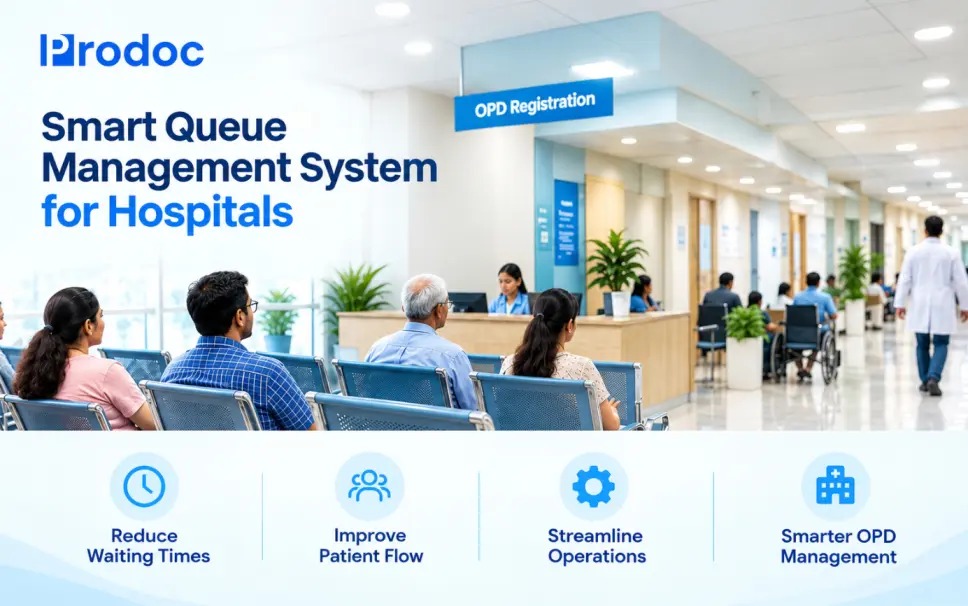
The impact of connecting even one stop is evident at PGIMER Chandigarh, where online registration cut median registration wait from 60 minutes to 15 minutes, while satisfaction rose from 29% to 90%. Extending context-driven AI across the patient journey could improve both patient experience and hospital operations.
Contextual Care Delivery via Patient Intelligence
One longitudinal record across departments. Today, a doctor looking for last year’s echo report scrolls through scanned PDFs, or asks the son. AI can read notes, reports and prescriptions into one structured timeline that every department can search.
Anticipate instead of react. Once information can be connected, hospitals can begin identifying what is likely to go wrong next. AI can spot patterns across thousands of patients, flag missed follow-ups and highlight risks associated with possible readmissions, allowing teams to intervene before a problem escalates.
Guide patients and families from the first touchpoint. Better coordination should start with the first call. AI can support multilingual enquiries, bookings, reminders and updates through familiar channels such as voice and WhatsApp. It can keep caregivers informed and involved without making them responsible for carrying every message between departments.
Listen to the patient between visits. Hospitals often have limited visibility into what happens between two consultations. AI can capture information about symptoms, recovery and medication adherence, then bring relevant changes to the clinician’s attention before the next appointment. This context is critical.
Keep clinical judgement at the centre. Doctors don’t want a second opinion from software. They want the right information in front of them. The Bessemer–Bain scorecard found that only 46% of clinicians trusted AI to support clinical decisions, while 77% overrode its suggestions more than half the time. Systems that ignore this trust gap go unused. Prodoc AI’s approach, which keeps the doctor’s plan as the source of truth, is one example of designing for it.
The folder stays at home
Picture the son again. This time, registration already has his father's history. The doctor already has last month's lab results. The follow-up is booked before they leave, and the reminder arrives in his father's language. The folder stays at home.
Hospital leaders do not need to change everything at once. They can start with one department where hand-offs regularly fail, connect the information and follow-up processes around it, and measure whether the experience improves.
The patient was always on one journey. It is time the hospital supported that journey.