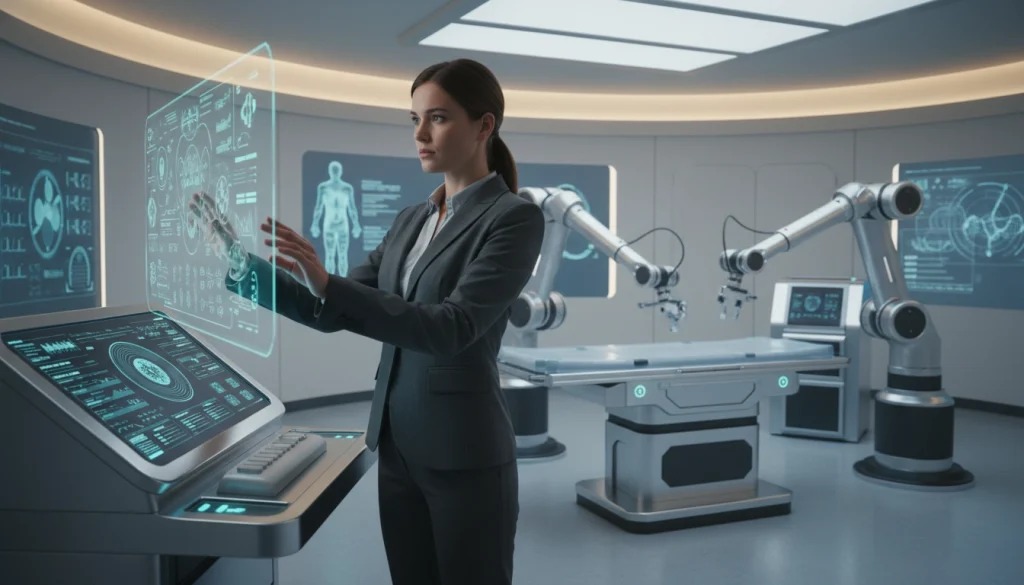
Future of Medicine: How AI, Robotics, and Innovation Are Transforming Healthcare
The future of medicine is being shaped by groundbreaking technologies that are revolutionizing how healthcare is delivered, diagnosed, and managed. Artificial Intelligence (AI), robotics, digital health solutions, and advanced medical innovations are enabling healthcare providers to offer faster, more accurate, and more personalized care than ever before.
As medical technology continues to evolve, patients can expect improved treatment outcomes, earlier disease detection, minimally invasive procedures, and greater access to healthcare services. In this article, we explore how AI, robotics, and emerging innovations are transforming the future of medicine.
The Evolution of Modern Healthcare
Healthcare has progressed significantly over the past few decades. From paper-based medical records and traditional surgeries to advanced imaging systems and telemedicine, technology has continuously improved patient care.
Today, innovations such as machine learning, robotic-assisted surgery, wearable health devices, and precision medicine are driving a new era of healthcare that focuses on prevention, personalization, and efficiency.
The Role of Artificial Intelligence in Medicine
Artificial Intelligence is one of the most influential technologies shaping the future of healthcare.
What Is AI in Healthcare?
AI refers to computer systems capable of analyzing large amounts of data, identifying patterns, and assisting healthcare professionals in making informed decisions.
Applications of AI in Medicine
Early Disease Detection
AI-powered systems can analyze medical images, laboratory results, and patient records to identify diseases at an earlier stage.
Examples Include
- Cancer detection
- Heart disease risk assessment
- Stroke prediction
- Diabetic retinopathy screening
Earlier diagnosis often leads to better treatment outcomes.
Improved Diagnostic Accuracy
AI algorithms can assist radiologists, pathologists, and clinicians by highlighting abnormalities that may otherwise be overlooked.
Benefits
- Faster diagnosis
- Increased accuracy
- Reduced human error
- Better patient outcomes
Personalized Treatment Plans
AI can evaluate individual patient data and recommend customized treatment strategies based on medical history, genetics, and lifestyle factors.
This approach supports the growing field of precision medicine.
Predictive Healthcare
AI can identify individuals at risk for developing chronic conditions before symptoms appear.
This Enables
- Preventive interventions
- Early lifestyle modifications
- Reduced healthcare costs
Robotics in Modern Medicine
Medical robotics is changing the way surgeries and procedures are performed.
What Are Medical Robots?
Medical robots are advanced systems designed to assist healthcare professionals during diagnosis, treatment, rehabilitation, and patient care.
Robotic-Assisted Surgery
One of the most significant applications of robotics is in minimally invasive surgery.
Advantages of Robotic Surgery
- Smaller incisions
- Greater surgical precision
- Reduced blood loss
- Less postoperative pain
- Faster recovery
- Shorter hospital stays
Common Procedures Using Robotics
- Urological surgery
- Gynecological surgery
- Cardiac surgery
- Orthopedic surgery
- Cancer surgery
Robotic systems allow surgeons to perform complex procedures with enhanced control and accuracy.
Robotic Rehabilitation
Robotics is also improving recovery for patients with neurological and musculoskeletal conditions.
Applications Include
- Stroke rehabilitation
- Spinal cord injury recovery
- Physical therapy assistance
- Mobility training
These technologies help patients regain function and improve quality of life.
Telemedicine and Virtual Healthcare
Telemedicine has become an essential component of modern healthcare.
Benefits of Virtual Care
- Remote consultations
- Increased access to specialists
- Reduced travel requirements
- Faster medical advice
- Improved chronic disease management
Patients can receive healthcare services from the comfort of their homes while maintaining continuity of care.
Wearable Health Technology
Wearable devices are empowering individuals to actively monitor their health.
Popular Health Monitoring Features
- Heart rate tracking
- Blood oxygen monitoring
- Sleep analysis
- Physical activity tracking
- Blood glucose monitoring
These devices provide real-time health data that can support early intervention and preventive care.
Precision Medicine and Genomics
The future of medicine is moving toward highly personalized treatment approaches.
What Is Precision Medicine?
Precision medicine uses genetic, environmental, and lifestyle information to tailor healthcare decisions to individual patients.
Benefits
- More effective treatments
- Reduced side effects
- Better disease prevention
- Improved patient outcomes
Genomic testing is helping healthcare providers develop targeted therapies for conditions such as cancer and rare genetic disorders.
3D Printing in Healthcare
Medical 3D printing is creating new possibilities for patient care.
Applications
- Customized prosthetics
- Surgical planning models
- Dental implants
- Orthopedic implants
- Tissue engineering research
This technology allows for highly personalized medical solutions.
Smart Hospitals and Digital Transformation
Hospitals are increasingly adopting digital technologies to improve efficiency and patient care.
Smart Hospital Innovations
- Electronic health records
- AI-powered workflow management
- Automated medication systems
- Remote patient monitoring
- Connected medical devices
These advancements improve operational efficiency and enhance patient safety.
Challenges and Ethical Considerations
While healthcare innovation offers tremendous benefits, certain challenges remain.
Key Concerns
- Data privacy and security
- Ethical use of AI
- Technology accessibility
- Regulatory compliance
- Human oversight in medical decision-making
Balancing innovation with patient safety and ethical responsibility will remain essential.
What the Future Holds
The next decade may bring even more remarkable advancements, including:
- AI-assisted medical decision-making
- Fully integrated smart hospitals
- Advanced robotic surgeries
- Regenerative medicine
- Gene-editing therapies
- Digital twins for personalized treatment simulation
- Improved remote healthcare systems
These developments have the potential to transform healthcare on a global scale.
Benefits of Healthcare Innovation
The integration of AI, robotics, and advanced technologies offers numerous advantages:
- Faster diagnosis
- Improved treatment accuracy
- Better patient outcomes
- Reduced healthcare costs
- Enhanced accessibility
- Personalized care
- Greater efficiency in healthcare delivery
Innovation is helping healthcare become more proactive, predictive, and patient-centered.
Conclusion
The future of medicine is being driven by Artificial Intelligence, robotics, precision medicine, digital health technologies, and other groundbreaking innovations. These advancements are reshaping every aspect of healthcare, from disease prevention and diagnosis to treatment and rehabilitation.
As technology continues to evolve, healthcare will become increasingly personalized, efficient, and accessible. While challenges remain, the integration of AI, robotics, and innovation promises a future where patients receive safer, smarter, and more effective care than ever before.