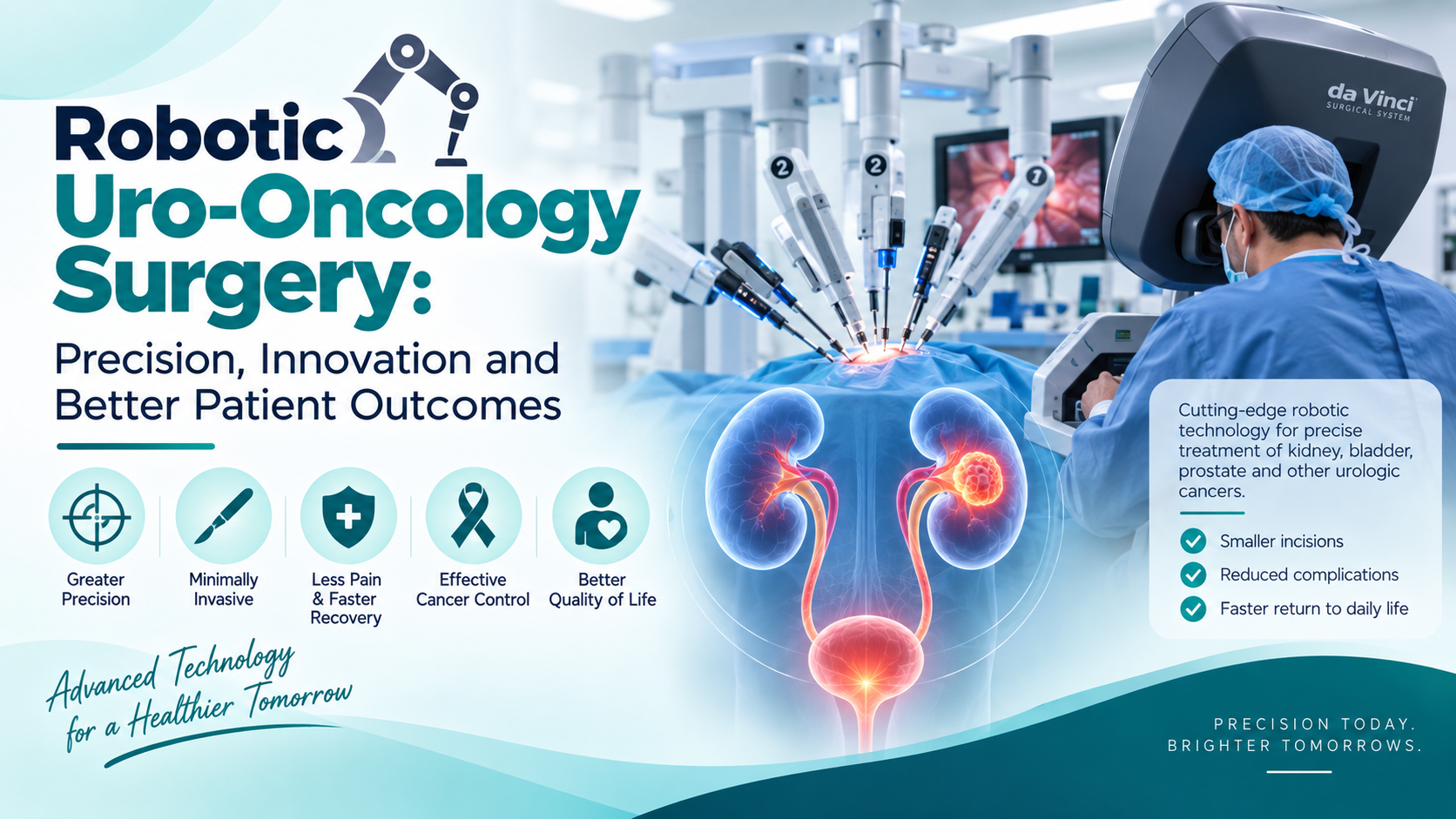
Robotic Uro-Oncology Surgery: Precision, Innovation and Better Patient Outcomes
How advanced robotic techniques are transforming cancer surgery and redefining the possibilities of modern urological care
The treatment of urological cancers has changed significantly over the past few years. Advances in imaging, surgical techniques and technology have made it possible to approach complex cancers with greater precision while keeping the patient's recovery and quality of life at the centre of care.
One of the most important developments in this field is robotic-assisted uro-oncology surgery. From prostate and kidney cancers to selected bladder and other urological tumours, robotic techniques are increasingly being used as part of modern cancer treatment for appropriately selected patients.
According to Dr. Rahul Gupta, Associate Director – Urology, Renal Transplant & Robotic Uro-Oncology at Medanta, the role of robotic surgery goes beyond simply using advanced technology. Its real value lies in helping surgeons perform complex procedures with greater visualisation, precision and control.
Precision in Complex Cancer Surgery
Urological cancer surgery often involves operating around delicate nerves, blood vessels and other important anatomical structures. The ability to clearly identify and carefully dissect these structures can be particularly important when the objective is to remove cancer while preserving healthy tissue and function.
Robotic surgical systems provide the surgeon with a magnified, three-dimensional view of the operative field. Specialised instruments allow controlled movements within confined anatomical spaces, making certain technically demanding procedures more precise.
For patients, this can be particularly relevant in surgeries where preserving normal anatomy is an important part of achieving good long-term outcomes.
From Cancer Removal to Organ Preservation
Modern uro-oncology increasingly focuses on more than tumour removal. Wherever medically appropriate, surgeons also aim to preserve organ function.
Kidney cancer provides a good example. In selected patients, robotic partial nephrectomy can allow the surgeon to remove the tumour while preserving as much healthy kidney tissue as possible. This approach can be especially valuable when maintaining kidney function is an important consideration.
Similarly, robotic prostate surgery may allow meticulous dissection around structures associated with urinary continence and sexual function. The goal is to achieve effective cancer control while reducing unnecessary damage to surrounding tissues.
However, robotic surgery is not automatically the best option for every patient. The decision depends on factors such as the cancer's stage, size and location, the patient's overall health, previous treatments and the surgeon's assessment.
The Robot Does Not Replace the Surgeon
There is sometimes a misconception that robotic surgery means that a machine performs the operation independently. In reality, robotic systems are sophisticated surgical tools controlled entirely by the surgeon.
The technology enhances the surgeon's ability to see and manipulate tissues, but clinical judgement, experience and decision-making remain fundamental.
Dr. Rahul Gupta's areas of expertise include robotic urology, uro-oncology, reconstructive urology, renal transplantation and endourology. His training includes an MCh in Urology from JIPMER, Pondicherry, following his medical and surgical training at GMC Bhopal.
His experience across complex urological conditions reflects an important principle of modern robotic surgery: advanced technology is most effective when combined with appropriate patient selection and surgical expertise.
Potential Benefits of Minimally Invasive Surgery
For appropriately selected patients, robotic-assisted procedures can offer several potential advantages compared with conventional open surgery. These may include smaller incisions, reduced postoperative discomfort, less blood loss in certain procedures and a potentially faster return to normal activities.
The exact benefits vary depending on the type and complexity of surgery, the patient's health and other individual factors.
More importantly, robotic surgery forms only one component of cancer treatment. Accurate diagnosis, staging, imaging, pathology, multidisciplinary planning and postoperative follow-up remain equally important.
Personalised Treatment Is the Future
The future of uro-oncology is moving towards increasingly personalised cancer care. No two patients have exactly the same disease, anatomy, medical history or treatment priorities.
For this reason, the decision to undergo robotic surgery should follow a detailed evaluation rather than being based simply on the availability of technology.
Patients diagnosed with prostate, kidney or bladder cancer should discuss all appropriate treatment options with their urologist and understand the potential benefits, limitations and expected outcomes of each approach.
A New Era in Urological Cancer Care
Robotic uro-oncology represents an important step forward in minimally invasive cancer surgery. By combining advanced visualisation and instrument control with the expertise of an experienced surgeon, robotic technology can support precise and carefully planned procedures.
For patients, the larger promise is not technology for its own sake. It is the possibility of achieving effective cancer treatment while paying greater attention to recovery, organ preservation and quality of life.
As robotic platforms, imaging technologies and cancer treatment continue to evolve, the focus of uro-oncology will remain firmly centred on one goal: delivering safer, more precise and increasingly personalised care for every patient.
About the Expert
Dr. Rahul Gupta
Associate Director – Urology, Renal Transplant & Robotic Uro-Oncology
Medanta

Kidneys at Work: The Silent Guardians of Your Health

Your Heart May Be Talking. Are You Listening?
Why Are More Young Adults Facing Nerve Damage, Numbness & Back Pain?
Robotic Uro-Oncology Surgery: Precision, Innovation and Better Patient Outcomes

Vape Culture: The Hidden Trap Among Youth

Flu Cases Rise in NCR: Dr. Abhijeet Singh on Symptoms, Treatment & Prevention